
1. Account Types
1.1 ECN Account
An ECN (Electronic Communication Network) account connects trades directly to banks and institutional liquidity providers.
Spreads are typically very low, while commissions are charged per trade.
This account type provides high transparency and fast execution, making it suitable for scalping strategies and high-frequency trading.
1.2 STP Account
An STP (Straight Through Processing) account routes orders directly to liquidity providers through the broker’s system.
Spreads are generally slightly higher than those of ECN accounts, but commissions may not be charged separately.
This account structure is more user-friendly and is often used by beginner or casual traders.
1.3 Key Differences
ECN Account:
- Lower spreads
- Commission-based cost structure
- Faster execution and higher transparency
- More appropriate for experienced traders
STP Account:
- Slightly higher spreads
- No separate commission in many cases
- Simpler and more accessible trading environment
- Suitable for less experienced traders
2. Order Types
2.1 Market Order
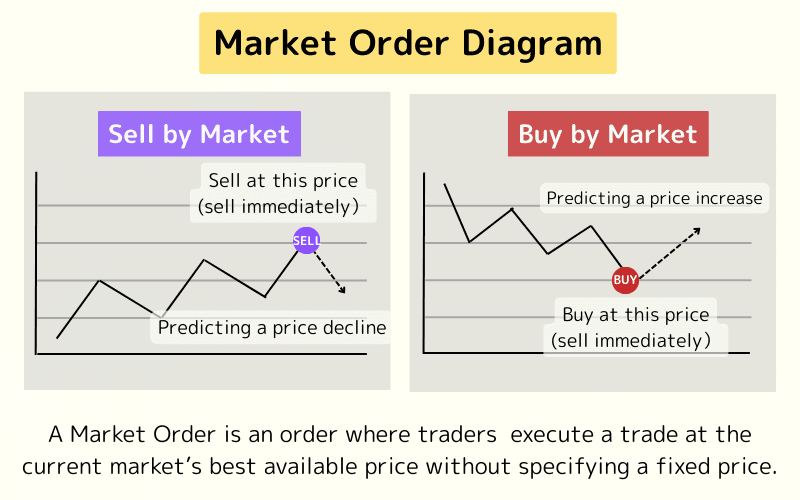
A market order executes immediately at the current available price.
While execution is instantaneous, there is a possibility of slippage, where the final price differs slightly from the price visible at the moment the order was submitted.
2.2 Pending Orders
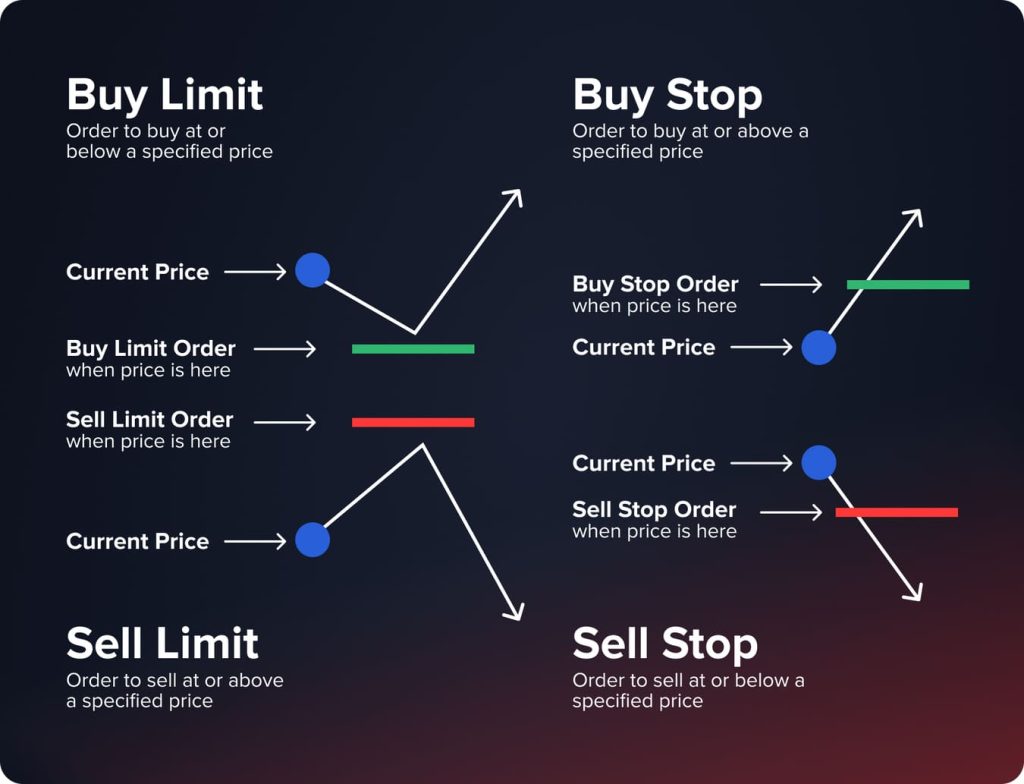
A pending order is a pre-set instruction to buy or sell when the market reaches a certain level.
For example:
- Buy Limit: Buy at a lower price.
- Sell Limit: Sell at a higher price.
- Buy Stop: Buy after a breakout upwards.
- Sell Stop: Sell after a breakout downwards.
Pending orders allow trading without continuously monitoring the market.
2.3 Stop Loss & Take Profit
Stop Loss (SL) and Take Profit (TP) are essential components of risk management:
- A Stop Loss automatically closes a position at a predetermined level to limit potential losses.
- A Take Profit automatically closes a position at a target price to secure gains.
Placing a Stop Loss is critical for protecting account equity and preventing excessive drawdowns.
2.4 Modify & Cancel Orders
- Pending orders that have not yet been triggered may be modified.
- Adjustments may include changing the entry price, lot size, or adding SL/TP levels.
- Pending orders may also be cancelled at any time to release reserved capital.
2.5 Other Order Terms
Important order-related concepts include:
- Close Order: The manual closing of an open position to realise either profit or loss.
- Partial Close: Closing a portion of an active position, allowing partial profit-taking while keeping the remainder open.
- Trailing Stop: A dynamic Stop Loss that moves automatically or manually to secure profits or reduce risk as the market moves favourably.
- OCO (One Cancels the Other): A pair of linked orders where triggering one order automatically cancels the other. Experienced traders use OCO orders to mitigate risk and when entering the market.