
1. What is the BOLL?
Bollinger Bands are basically three lines, one above the price, one below, and one in the centre, creating a tube-like graphic throughout the market.
The middle line is simply a moving average, while the upper and lower lines, or “bands,” sit above and below the candlesticks, based on how volatile the market is.
- When volatility increases, the bands widen.
- When volatility decreases, the bands tighten.
The default setting is a 20-period moving average with bands placed 2 standard deviations above and below that average, but these parameters can be customised depending on different trading styles.
2. How to Use Bollinger Bands
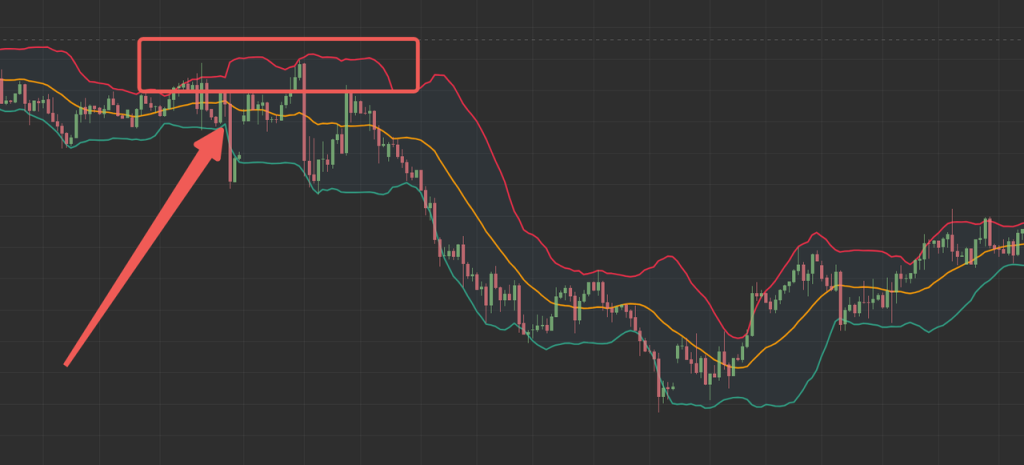
If price pushes above the upper band, it’s often seen as a sell signal, as it indicates that price may be overbought.
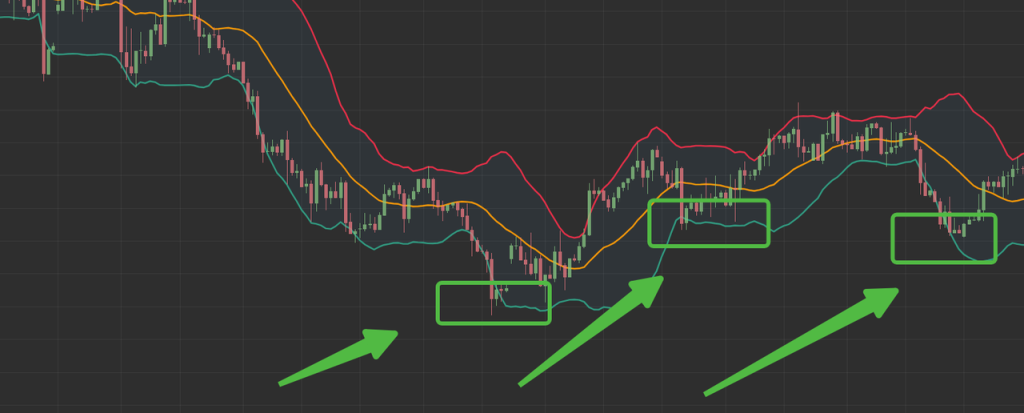
If the price drops below the lower band, it’s often seen as a buy signal as the price may be oversold.
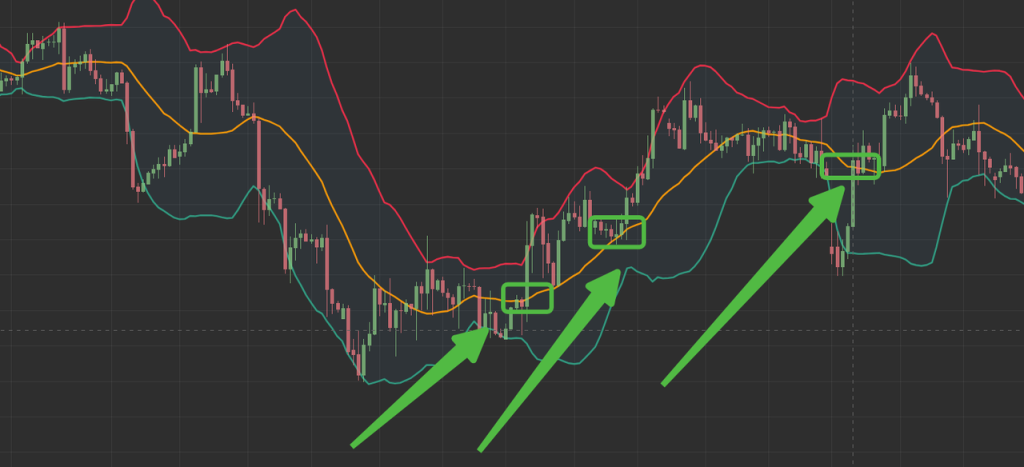
If price crosses the middle line from below to above, that’s a sign momentum could be turning bullish.
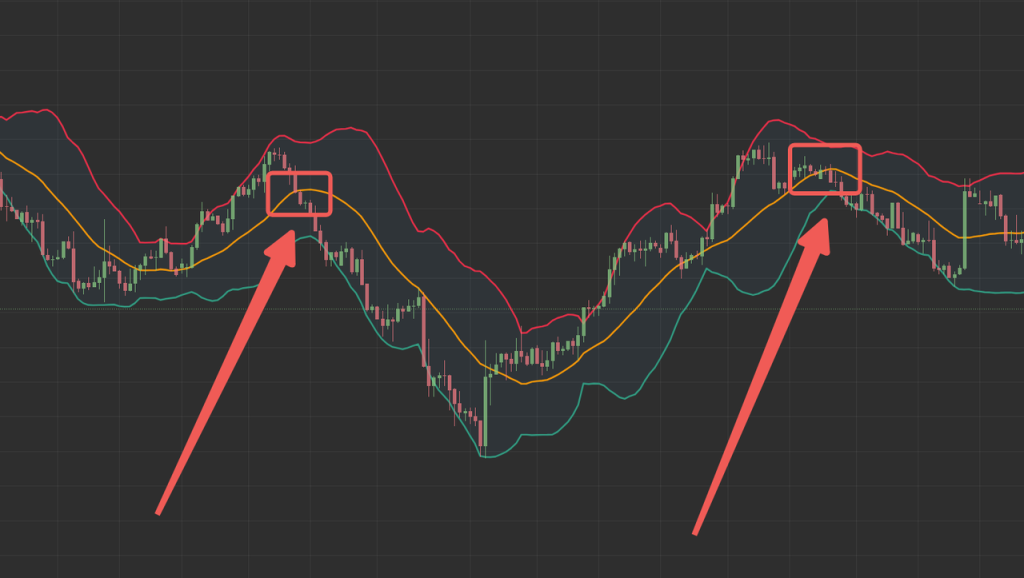
If price crosses the middle line from above to below, that’s a bearish signal, as it may be indicating that momentum may be turning bearish.
3. Combining Bollinger Bands With Other Indicators
Bollinger Bands become more powerful when paired with additional tools, such as the TRIX indicator (Triple Exponential Average) and a moving average:
When the TRIX crosses above its moving average and price breaks above the Bollinger centre line, this may signal a potential buy setup.
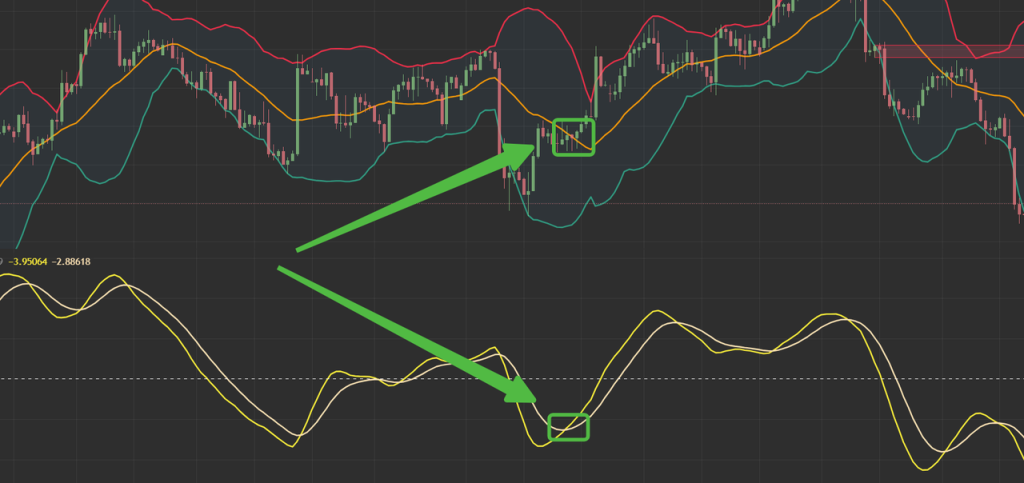
Conversely, if price falls below the centre line and the TRIX dips below its EMA, this may indicate downside momentum and a potential sell setup.