
1. What Is the ORB Strategy?
The Opening Range Breakout (ORB) strategy is based on the price range formed shortly after a market opens or when a major trading session begins.
The strategy defines a range using the high and low of the first 5, 15, or 30 minutes of trading. When price breaks above or below this initial range, a trade is executed in the direction of the breakout.
ORB is widely used across stocks, forex, and futures markets, particularly by intraday traders and scalpers, due to its structured rules and clear entry conditions.
2. How the ORB Strategy Works
2.1 Define the Opening Range
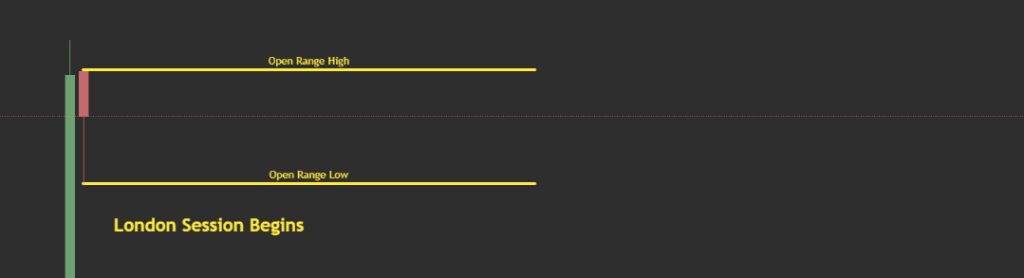
At the start of a major trading session, the first candle on a selected timeframe (commonly 5-minute, 15-minute, or 30-minute) is used to establish the opening range.
- The highest price of the candle marks the range high
- The lowest price of the candle marks the range low
These two levels form the boundaries of the opening range.
2.2 Wait for the Breakout
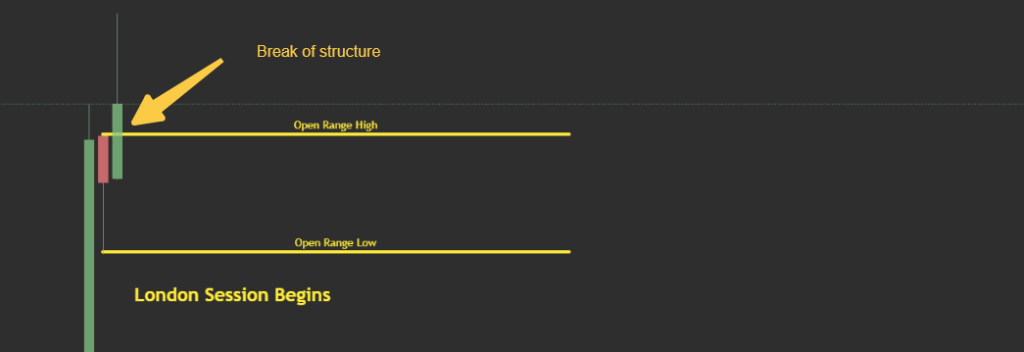
Once the opening range has been defined, price is monitored for a breakout.
A valid breakout occurs when price:
- Closes partially or fully above the range high, or
- Closes partially or fully below the range low
This movement represents a break of structure, indicating potential momentum in the breakout direction.
2.3 Trade Execution
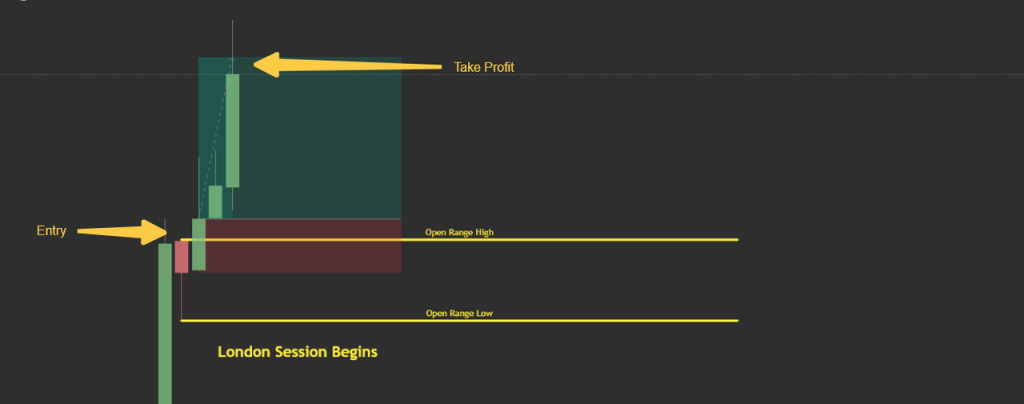
After a confirmed breakout:
- A long position is considered if price breaks above the range high
- A short position is considered if price breaks below the range low
Risk management is applied immediately by setting a stop loss within or beyond the opposite side of the range.
Take-profit targets are commonly set using a 1:2 or 1:3 risk-to-reward ratio, ensuring disciplined trade management.
3. Key Characteristics of the ORB Strategy
- Clearly defined entry levels
- Objective structure with minimal subjectivity
- Suitable for volatile session opens
- Effective for short-term trading styles