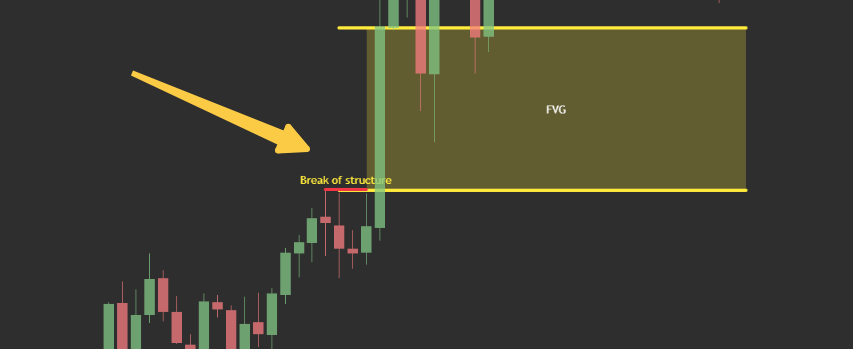
1. What is an FVG?
A Fair Value Gap (FVG) can be classified as either bullish or bearish.
An FVG forms when the market moves aggressively in one direction, creating a price imbalance caused by insufficient buying or selling activity within a short period of time.
This imbalance occurs because price moves too quickly for all pending buy and sell orders to be executed. As a result, certain price levels are skipped, leaving unfilled orders within that range.
Due to this imbalance, price frequently returns to these levels at a later stage, offering potential opportunities for market participation from these zones.
FVGs are often considered a form of internal liquidity, as they represent areas where orders remain unexecuted. Liquidity concepts are typically explored further when studying advanced market structure models.
2. How to identify a FVG?
A valid Fair Value Gap requires three consecutive candles.
An FVG is identified when there is a gap between the highest wick of the first candle and the lowest wick of the third candle.
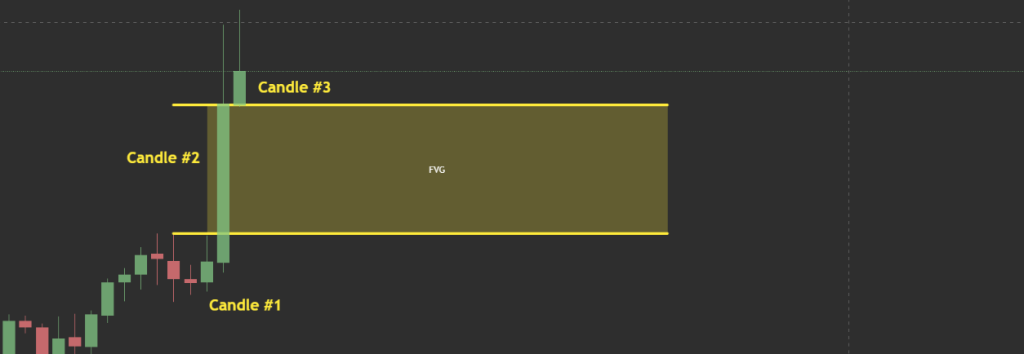
Validation Rules
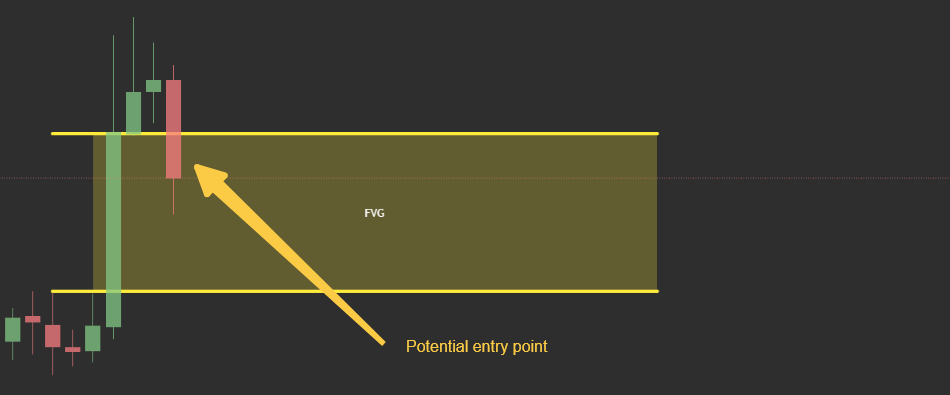
- The FVG must remain untested. If price has already traded fully back through the gap, the FVG is considered invalid.
- Candle wicks may enter the gap. As long as the candle body closes within or outside the gap in the direction of reaction, the FVG can still be considered valid.
- A full body close beyond the gap invalidates the FVG.
3. Confluence and Strength of FVGs
Fair Value Gaps are most effective when aligned with additional technical confluences, such as:
- Support and resistance zones
- Market structure shifts
- Breaks of structure (BOS)
For example, when an FVG forms near a newly created support zone that was previously resistance, the probability of a price reaction increases.
4. Key Observations
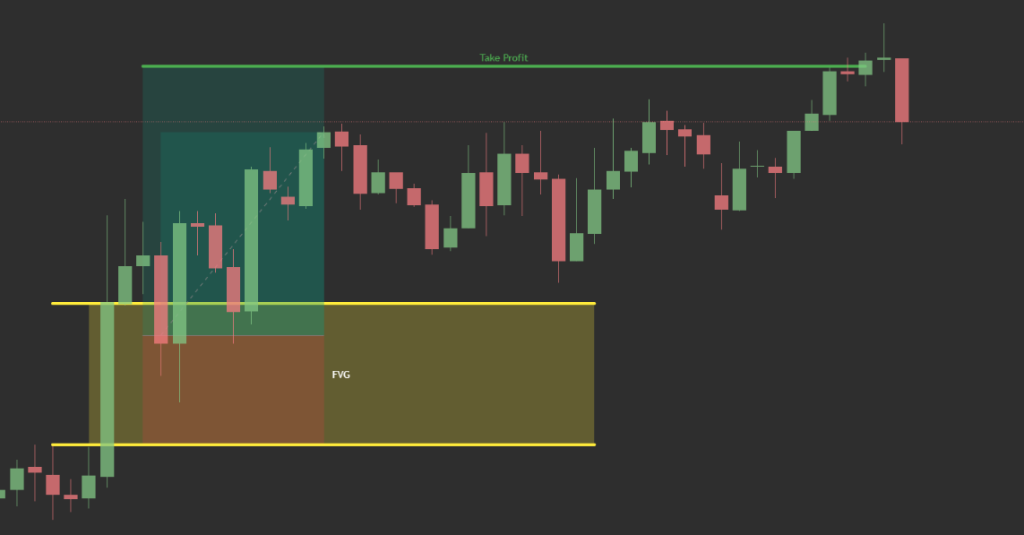
- The lowest unfilled FVG on a chart is typically the strongest
- FVGs created during a strong impulsive move that breaks market structure are more reliable
- Structural breaks combined with FVG formation often provide higher-quality reaction zones