
1. What is an IFVG?
An Inverse Fair Value Gap (IFVG) originates from the same structural formation as a standard FVG.
It is created using a three-candle sequence, where the middle candle expands aggressively in one direction, producing a price imbalance. This imbalance appears as a gap between:
- The high of the first candle and the low of the third candle (bearish structure)
- The low of the first candle and the high of the third candle (bullish structure)
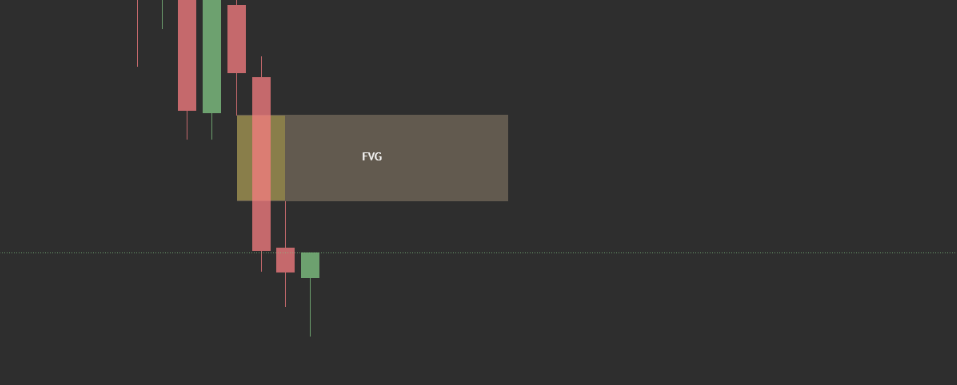
This gap represents a zone where insufficient buy or sell orders were executed due to the speed of price movement. As with standard FVGs, price often revisits this area to rebalance inefficiencies left in the market.
2. Key Difference Between FVG and IFVG
The defining characteristic of an IFVG occurs after price returns to the original Fair Value Gap.
- In a standard FVG, price typically reacts and respects the imbalance.
- In an IFVG, price fails to respect the Fair Value Gap, trading through it rather than reacting from it.
When this occurs, the original FVG is considered invalidated and inverted, becoming an Inverse Fair Value Gap.
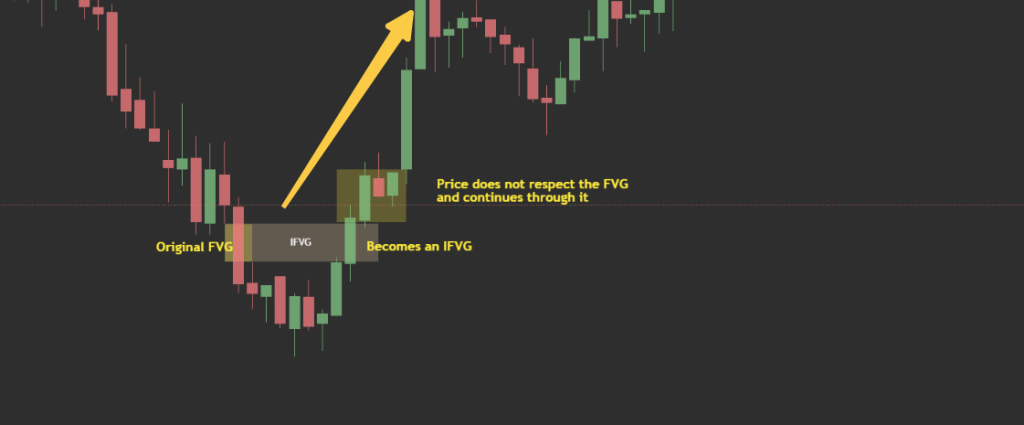
This failure to respect the imbalance often signals a shift in market intent, suggesting that the market is attempting to reverse direction.
3. Trading Implications of an IFVG
Because an IFVG reflects a rejection of the original imbalance, it is commonly interpreted as a reversal confirmation zone rather than a continuation zone.
Key characteristics include:
- Increased probability of price continuation in the direction of the inversion
- Stronger validity when aligned with:
- Market structure shifts
- Break of structure (BOS) or Change of Character (CHoCH)
- Higher-timeframe bias
When used within a structured framework, IFVGs can offer high-probability directional opportunities, particularly when confirmed by additional confluence.